
Will ChatGPT Send Customers to You or the Guy Down the Road?
7 min read
Let's start with how people actually find you around here. A neighbor says your name over the fence. Somebody googles you at a red light on Route 44. Somebody's cousin shares your Facebook post. That's the Quiet Corner. That's how it's always worked.
Now there's a new regular at the counter. People are opening ChatGPT and asking it, flat out: "Who's a good electrician near Putnam?" "Where do I get breakfast in Woodstock, CT?" And it answers. With names. Real businesses. Maybe yours. Maybe the guy down the road.
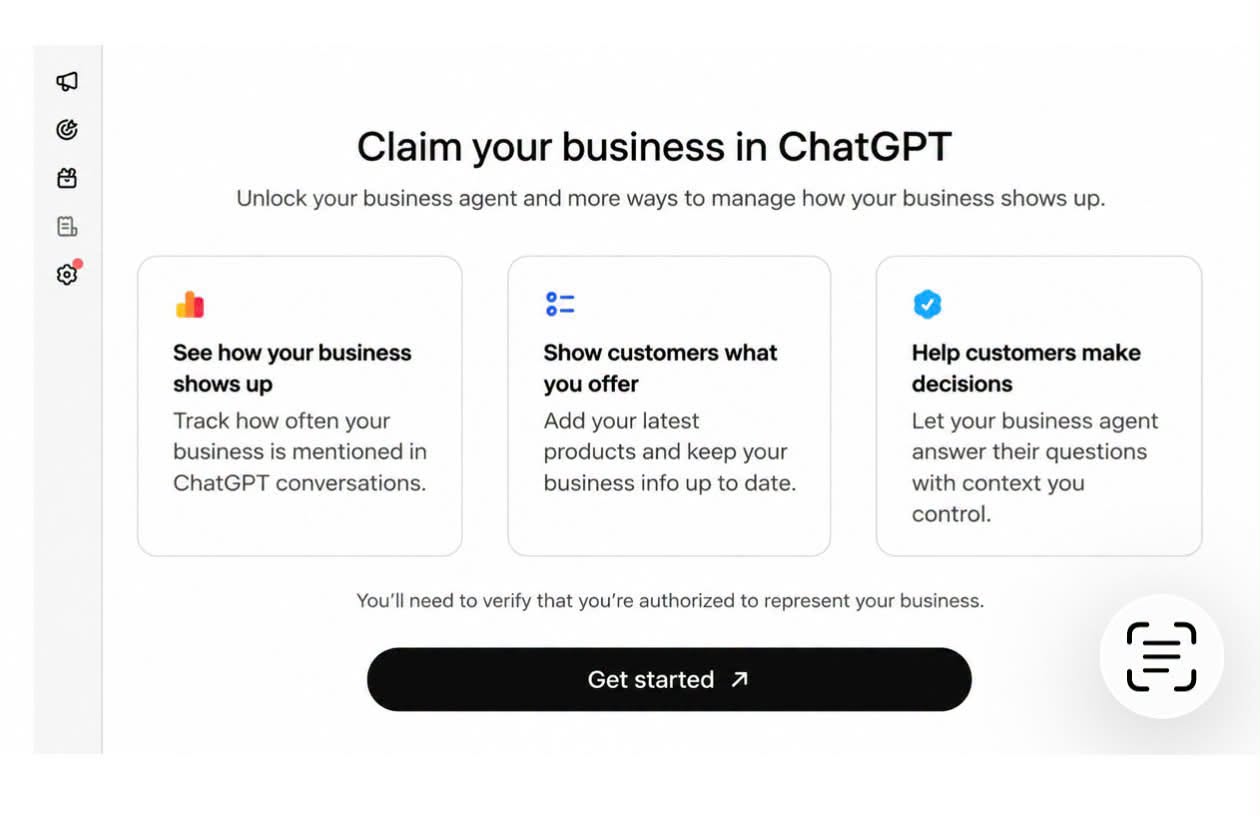
Right on cue, the internet has worked itself into a lather. OpenAI, the story goes, is about to let you "claim" your business inside ChatGPT, just like a Google Business Profile. The biggest thing in local marketing in years, they say. Get in line now.
Let me pour a little cold water on that. Then I'll tell you what's actually worth your time this week.
The 6 fixes at a glance
Short on time? Here's the whole list. Details are below.
- Let the right bots read your website.
- Give Google and Bing a map of your pages.
- Label your business facts so a machine can't misread them.
- Make every listing say the same thing.
- Say what you do and which towns you serve.
- Use one business name everywhere and clean up old profiles.
What's real right now (and what's smoke)
There's no "claim your business" button. Not yet. OpenAI hasn't published any self-serve way for a local business to claim a ChatGPT profile.
Somebody calls offering to "get you listed in ChatGPT" for a fee? Hang up. OpenAI doesn't sell spots in its answers. Whoever's on the phone is selling something, and it isn't that.
The business agents are real. They're just ads. With Sponsored Agents, an ad shows up in ChatGPT and a customer can chat with an AI assistant that speaks for that business.
Here's the part that matters: to build that assistant, ChatGPT starts by reading the company's own website.
ChatGPT already has an opinion about you. Ask it for a local recommendation and it goes digging through whatever's out in public: your website, your listings, your reviews, what other sites say about you.
So button or no button, the truth doesn't change: AI is already building its picture of your business out of whatever you've left lying around online. The only question is whether what you left is any good.
The real problem: your business is telling three different stories
I see this constantly with local businesses.
Picture a heating and cooling outfit in Killingly:
- The website says it serves "Windham County."
- Google brags about heat pumps, but the website never says "heat pump."
- Facebook still has the old phone number.
- Yelp shows hours from years ago.
A regular customer can sort that out. An AI stitching together a dozen sources might not. It gets your details wrong. Or worse, it shrugs and sends the customer to the competitor whose story actually lines up.
So before anybody sells you shiny new tools to "manage your AI presence," clean your own kitchen. Make sure the basics aren't arguing with each other.
1. Make sure the right crawlers can get in the door
Your website has a small file called robots.txt. Think of it as the bouncer. It tells automated visitors what they can and can't read. Sometimes the bouncer is turning away people he shouldn't, usually by accident after a redesign or a security plugin install.
ChatGPT search uses a bot called OAI-SearchBot. OpenAI says sites that block it won't show up in ChatGPT search answers. (A different bot, GPTBot, is for training. You can block one and allow the other.)
Also ask your web host if their firewall blocks AI bots by default. Some do, and they don't advertise it.
Quick test: go to yourwebsite.com/robots.txt and look for any line that says "Disallow: /" under a bot you care about.
2. Hand search engines a map
An XML sitemap lists the pages you want found. Make sure yours includes your main service pages and the pages for the towns you serve. Make sure it isn't still pointing at old, deleted or duplicate pages, which is like handing someone directions to a restaurant that closed in 2019. Submit it to both Google Search Console and Bing Webmaster Tools. Both are free.
3. Label your business so a machine can't misread it
Structured data (you'll hear it called schema) is behind-the-scenes code that spells out the facts about your business in a format machines read easily: official name, address or service area, phone, hours, services, and links to your official social profiles. It's the label on the container in the walk-in: what it is, whose it is, no guessing.
If you have it, make sure it matches what's actually on your site. If you don't, this is one of the highest-value fixes a web person can make for you in an afternoon.
4. Get every listing telling the same story
Pull up every place your business shows up online and line them up side by side:
- Your website
- Google Business Profile
- Bing Places and Apple Business Connect
- Yelp and Facebook
- Your chamber of commerce listing and any industry directories
- Local community sites and town directories
Name, address, phone, hours and services should match everywhere. "St." versus "Street" is fine. Two different phone numbers is not.
5. Say what you do and where you do it
Nobody, human or machine, should have to guess. Give each main service its own clear page in plain language. Name the towns you actually serve, whether that's Putnam, Thompson, Woodstock, Pomfret, Killingly, Brooklyn, Plainfield or beyond.
One warning: don't respond to this by cranking out 40 thin, copy-and-paste town pages. That's not a menu. That's the same frozen dish with 40 different names on it. Clear and honest beats big and repetitive, every time.
6. Tidy up your brand identity
Pick one spelling of your business name and use it everywhere. Update or shut down the old social profiles you abandoned. Point old domain names at your current site. Changed your name, phone or location in the last few years? Go hunt down the old versions. They're still out there, confusing people.
What this checklist won't do
Straight talk: no checklist can guarantee ChatGPT recommends your business. Nobody can promise that, and anybody who does is not someone you want to do business with. Reviews, reputation and whether you're actually good at what you do still matter most. They always will.
What this work does is take away the reasons an AI tool might get you wrong or pass you by. And here's the bonus: every item on this list helps you on Google Maps and in regular search today.
Why this matters even more in a small market
In a big city, a search for "roofer near me" turns up dozens of options. Up here, there might be a handful in each category. Ask ChatGPT for a roofer near Danielson and the short list is short. Being the business whose information is clear, current and consistent is a real edge. And most of your competitors haven't done this work yet.
Where to start
You don't have to do all six tonight. Start with the robots.txt check and your listings comparison. Those two catch the most problems in the least time.
Want a head start? Big Cat Marketing Group has free tools built for small businesses at bigcatmarketinggroup.com/tools. Use them to check your marketing, website and promotion, find ways to bring in more customers, and see how you stack up against the competition.
Rather have someone walk through it with you? Reach out. Helping Quiet Corner businesses get found, online and off, is what we do.
John Bogdanski is the founder of Big Cat Marketing Group, which helps small businesses across northeastern Connecticut with online and offline marketing strategy, websites and promotion.